 Язык
Язык English
 français
 Deutsch
 русский
 español
 português


Что Вы ищете?

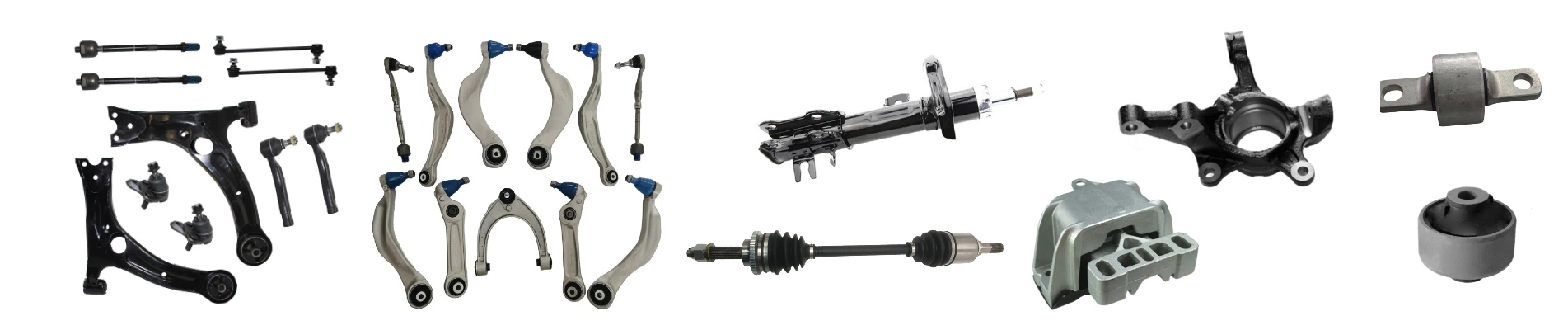
Your car’s suspension system is essential for a safe, comfortable drive. It smooths bumpy roads, stabilizes the vehicle during turns, absorbs road impacts, and keeps tires firmly grounded. A faulty suspension leads to rough rides, strange noises, and compromised driving safety for daily commutes and long trips.
A top question for all car owners is: How long do suspension parts last? Lifespan varies greatly depending on road conditions, driving habits, vehicle load, and regular maintenance. In this guide, we cover the average service life of key suspension parts, common wear warning signs, and practical maintenance tips to prolong component life.
A functional suspension system relies on interconnected components, each with a unique lifespan. Below are the most critical suspension components and their standard replacement mileage for regular passenger cars.
Factory-installed shocks and struts can last 100,000 miles under ideal smooth-road conditions, but frequent city and rough-road driving often requires replacement at 50,000 miles.
Control arms rarely fail, but worn bushings are common in vehicles over 5 years old. Replacing only bushings is a cost-effective alternative to full control arm replacement.
Sway bar links are among the most frequently replaced suspension parts, but they are affordable and easy to repair.
Worn ball joints pose serious safety risks, including potential wheel separation, so always inspect them during routine servicing.
Suspension lifespan varies drastically based on daily use. These key factors determine how long your suspension system will last:
Potholes, cracked pavement, gravel roads, and frequent speed bump crossings create constant impact stress, fatiguing shocks, struts, and joint parts. Smooth highway driving preserves suspension components far better than rough urban or rural roads.
Hard braking, fast cornering, reckless speed bump crossings, and off-roading put extreme strain on the entire suspension. Gentle, steady driving is the simplest way to extend suspension parts life.
Consistent overloading compresses shocks, springs, and bushings long-term, accelerating component wear and weakening the suspension’s cushioning ability.
Road salt, heavy rain, high humidity, and cold temperatures corrode metal suspension parts and dry out rubber seals and bushings, leading to faster wear in snowy or coastal areas.
Skipping suspension inspections, wheel alignment, and tire rotations turns minor wear into severe damage. Even slight misalignment can wear out multiple suspension components quickly.
Proactive maintenance avoids premature suspension failure and expensive repairs. Follow these key tips to maximize suspension parts lifespan:
Inspect shocks, struts, links, bushings, and ball joints every 10,000 miles or during oil changes. Check for leaks, cracks, rust, and damaged rubber parts to catch issues early.
Schedule a wheel alignment every 20,000 miles or after hitting large potholes/curbs. Rotate tires every 5,000–7,000 miles to ensure even wear and reduce uneven suspension stress.
Adhere to your vehicle’s weight limit, slow down for rough roads and speed bumps, and avoid high-speed sharp turns to minimize suspension strain.
Wash the car undercarriage regularly to remove corrosive road salt and dirt. Lubricate movable suspension joints during servicing to reduce friction wear.
Always replace shocks, struts, and sway bar links in front or rear pairs. Single-part replacement causes unbalanced suspension performance and accelerated opposite-side wear.
To answer how long do suspension parts last: most suspension components deliver 50,000–150,000 miles of service with proper care. Lifespan ultimately depends on your driving style and maintenance consistency.

ГОТОВЫ К ПОДПИСКЕ?
Компания СМК поставляем автозапчасти для ниже автозапчасти : Японские автомобили: Тойота, Хонда, Ниссан, Мазда, Субару, Митсубиси, Сузуки, Исузу. ... Европейский автомобиль: BMW, Benz, VW, Audi, Skoda, Порше, Мазерати, Рено, Пежо , Ситроен, Фиат, Опель, Ленд Ровер ... Американская машина: Тесла, Форд, Крайслер , Кадиллак , Бьюик , GMC, Шевроле, Линкольн, Фиат, Додж, ... Корейские автомобили: Hyundai, Kia, Daewoo. ... Китайские автомобили: Chery, Geely, GreatWall, Haval, BYD, Changan, JAC... Мы поставляем детали по всему миру: США, Канада, Европа, Мексика, Колумбия, Корея... Мы являемся ведущим поставщиком следующих автозапчастей: Детали подвески и рулевого управления (рычаг управления, рулевая тяга, стойка стабилизатора...) Тесла Aftermarket P искусства. Двигатель М подсчет/передача М количество СМК Авто части специально разработан для ремонта автомобилей части Наши компоненты шасси проходят строгие испытания, чтобы легко выдерживать сложные и изменчивые дорожные условия и климат. Продукция не только отличается исключительной прочностью, но и обеспечивает широкую совместимость и превосходную устойчивость, гарантируя вашим автомобилям надежную и долговечную поддержку. Многие зарубежные клиенты установили с нами долгосрочные партнерские отношения. Благодаря постоянному росту клиентской базы, многие зарубежные клиенты доверяют нам производство различных видов автомобильных запчастей. Чтобы удовлетворить разнообразные потребности клиентов, мы активно расширяем линейки продукции. Мы придерживаемся высоких стандартов производства, гарантируя, что каждое изделие соответствует строгим требованиям безопасности и долговечности, предъявляемым к различным рынкам. Мы приглашаем клиентов со всего мира выбрать нашу продукцию и обеспечить надежную защиту и повышение производительности ваших автомобилей! SMK всегда придерживается клиентоориентированного подхода, постоянно повышает качество продукции и уровень обслуживания, стремясь создавать большую ценность для клиентов по всему миру. В будущем мы продолжим придерживаться принципа «качество прежде всего, клиент прежде всего» и будем тесно сотрудничать с нашими партнерами для создания лучшего будущего.
 Поддерживается сеть IPv6